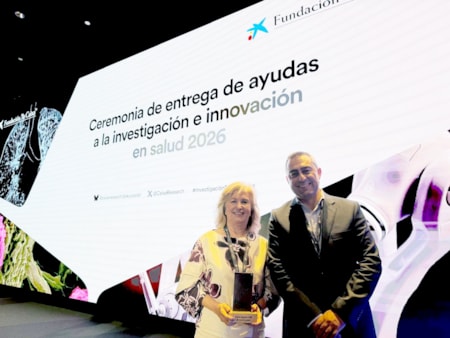
The “la Caixa” Foundation has selected the ARMOR project as one of 32 health research projects chosen in 2026, after evaluating 800 proposals. The project, led by Coral Barbas, principal investigator of the Mass Spectrometry and Clinical Analysis Research Group (GIR CEMBIO) at Universidad CEU San Pablo, has been selected in the “la Caixa” Foundation’s 2026 Health Research call for proposals. The election comes with a funding of 996,078.82 euros. The initiative supports basic, clinical, and translational research aimed at generating scientific knowledge with the potential to drive new therapies and intervention strategies.
The project will study the role of albumin and free fatty acids in the body’s natural defense against mucormycosis, a highly fatal fungal infection that particularly affects vulnerable individuals and for which new therapeutic alternatives are still needed. This grant represents significant support for the research conducted at CEU San Pablo University and will enable further investigation on one of the body’s natural defenses that could be applicable to treat this infection.
A new approach to combatting the infection
Mucormycosis is a fungal infection that can turn severe, especially in people with weakened immune systems or certain metabolic disorders, such as diabetes. Its high mortality rate and the limited treatment options available make understanding the biological mechanisms involved in its development a priority for biomedical research.
Previous research by the team suggests that albumin, the most abundant protein in the blood, may play a key role in the body’s natural defense against mucormycosis. This protein transports free fatty acids capable of damaging the fungus’s mitochondria—structures essential for its energy production—and thus inhibiting its growth.
However, this defense mechanism could be compromised when albumin levels are low. Under such circumstances, the fatty acids can become oxidized and lose their antifungal activity. The research team has also observed elevated levels of oxidized and inactive fatty acids in patients with mucormycosis, a finding that points to a possible link between these compounds’ metabolism and susceptibility to infection.
New therapeutic possibilities
Based on this evidence, the research will analyze the mechanisms involved in this natural protection and evaluate whether restoring albumin levels in patients with low levels could help strengthen their defenses against infection.
The project thus aims to further explore a strategy based on the body’s own biological mechanisms, with the goal of determining its potential usefulness in preventing or treating mucormycosis. Although its potential still needs validation, the results could lay the groundwork to explore new metabolic interventions that complement existing treatment options.
In addition to its potential implications for treatment, the resulting knowledge could help better identify individuals at higher risk of developing this infection and understand the factors that influence its progression. In the long term, this line of research could facilitate the development of new preventive, diagnostic, and therapeutic tools for severe fungal infections.
International collaboration
This collaboration brings together clinical experience and experimental knowledge to address mucormycosis from different perspectives and gain a deeper understanding of the mechanisms that determine the fungus’s ability to grow and cause disease. The project features an international team of principal investigators comprising Johan Maertens of KU Leuven; Agostinho Carvalho of the University of Minho; Georgios Chamilos of the Foundation for Research and Technology – Hellas (FORTH); and Victoriano Garre of the University of Murcia, along with the team led by Coral Barbas at CEU San Pablo University.
Caixaresearch health research call for proposals
This year, the “la Caixa” Foundation has launched the first edition of the Call for Proposals on Health Promotion Research. It aims to identify research projects that advance the design and evaluation of medical interventions in the areas of health promotion and disease prevention.
The Call focuses on the final phase of the research process: feasibility, equity, and implementation in real-world healthcare settings. To translate evidence into better care, the projects combine real-world data, digital tools, and participatory research. Their goal is to help health services provide earlier, more accessible, and more personalized care in fields such as mental health, women’s and children’s health, chronic disease management, and complex care needs.