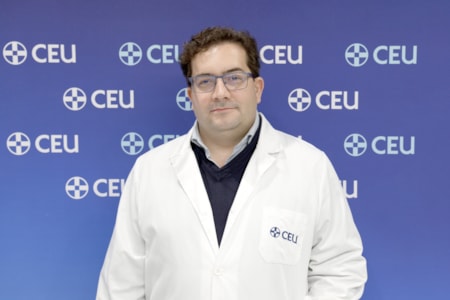
A team of international researchers, including Rafael Carballeira, professor at Universidad CEU San Pablo, has created a global dataset on aquatic fungi. The study is part of the FunAqua project and has provided insight into the biodiversity of fungi in aquatic environments through environmental DNA.
The paper, published in the scientific journal Scientific Data, part of the Nature group, compiles data from 1,452 sampling sites across 87 countries on every continent. A grand total of 2,375 environmental samples—1,076 of which came from sediments and 1,299 from filtered water—were analyzed using genetic sequencing techniques. The results provide a comprehensive overview of aquatic fungal diversity on a global scale: the dataset contains 50,152 operational taxonomic units (OTUs) of fungi, groups defined by the similarity of their DNA sequences.
One of FunAqua’s key points is their use of environmental DNA (eDNA). Organisms leave small traces of genetic material in the environment where they live. By analyzing the DNA in water or sediment samples, scientists can identify several organisms without direct observation or laboratory culturing.
This project has used metabarcoding and ITS region sequencing, which is commonly used as a genetic “barcode” to identify fungi. This enabled the researchers to study samples from varying ecosystems comparatively and build a comprehensive picture of their biodiversity.
The atlas includes both freshwater and marine ecosystems, with samples from lakes, rivers, and other aquatic environments around the globe. As well as the genetic data, FunAqua incorporates environmental and physicochemical information about the samples, which will allow researchers to study each fungi’s location and the environmental factors that may be related to their distribution.
Although aquatic fungi tend to receive less attention than other organisms, they play a fundamental role in the functioning of aquatic ecosystems. Their activity directly influences carbon cycles and nutrient recycling, lake and reservoir water quality, and the ability of aquatic environments—such as rivers, wetlands and marshes—to maintain their biodiversity and recover from environmental or human disturbances.
However, the diversity and global distribution of aquatic fungi remain far less well- documented than those of other aquatic microorganisms or even terrestrial fungi. Genetic sequencing techniques are also revealing a diversity that had gone unnoticed for decades using traditional methods of culturing and microscopic observation.
Beyond their discoveries, one of FunAqua’s main strengths is that the generated data is made available to the scientific community to reuse. This information can serve as a starting point for new research on biodiversity, biogeography, and the functioning of aquatic ecosystems. Another possible use for the results is studying the environmental factors that determine the presence and distribution of different fungal communities.
Furthermore, FunAqua is designed as a living resource: its developers plan to periodically incorporate new metabarcoding data, gradually expanding the information available on global aquatic fungal biodiversity.
https://doi.org/10.1038/s41597-026-07729-8